









AI Foundations has been added to the course catalog for the 2026-27 school year amidst growing controversy about the use of artificial intelligence (AI) in schools and elsewhere. The semester-long class would be taught by computer science teacher Benjamin Krokower.
“It’s going to be teaching how to use AI as well as how AI and LLMs (Large Language Models) work and why they work and some of the biological underpinnings of what we currently call AI in computer science,” Krokower said.
Krokower sees this as an important subject for students to understand amidst the growing prevalence of these technologies.
“AI is beginning to infuse just about every aspect of our life in the same way that about 30 years ago the internet and access to networks became the norm,” Krokower said. “I think that over the next five to 10 years AI will just be part of every device; every piece of technology we have will have some AI component to it and using it, being comfortable with it, and learning to take full advantage of it will be important for everyone to learn.”
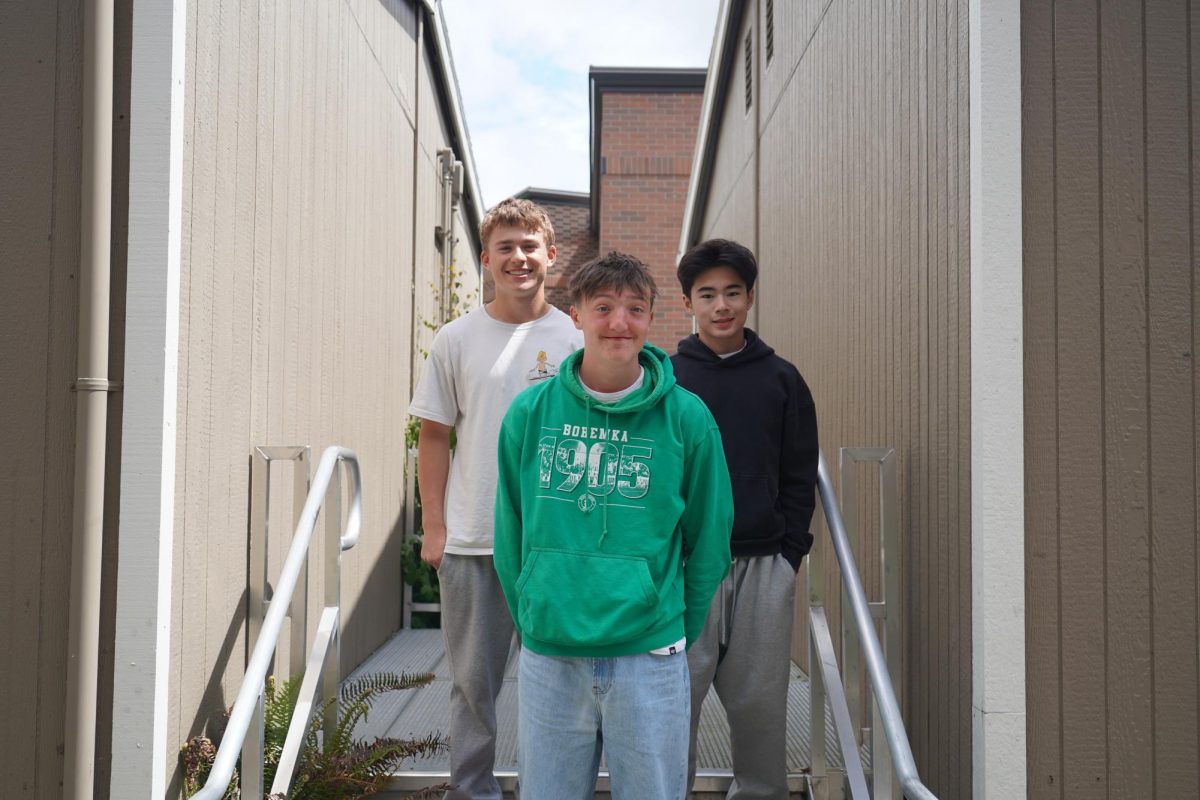
Freshman Lucas Vician has noticed how common AI has become.
“If you search something up on Google, the first answer to come up is an AI answer, so that’s probably the most common thing I use it for,” Vician said. “Sometimes I’ll use ChatGPT just to search something up if I’m not getting the answer I want on Google.”
Krokower has also found AI helpful with everyday tasks.
“If I’m communicating to a large group of people, usually through an email, I’ll often draft an email and then send it through AI for succinctness and clarity, spelling, grammar, these kinds of things,” Krokower said.
He finds that by sending something through AI after he writes it himself, he maintains his own voice and personality.
“If I’m presenting something as mine, it should be mine, and by writing it first I feel like I can have ChatGPT just tweak what I’m saying,” Krokower said.
Ultimately, Vician finds that AI’s easy use makes it hard to avoid, including in a school environment. This can be helpful, though it is often misused.
“I think it’s fine using it in school as long as it’s not for cheating during tests,” Vician said.
Krokower has observed both benefits and drawbacks to this increased accessibility to AI.
“On the positive side, AI is so useful for learning, especially for coding,” Krokower said. “You can find the answer to just about any question through just a plain language question to ChatGPT or Gemini or Claude. On the negative side, it’s made cheating really really easy.”
For many students, artificial intelligence has made cheating more appealing and impeded their learning. Junior Conor Pereyra doesn’t use it for that reason.
“When you’re using it, you’re kind of using an easy way out,” Pereyra said.
Krokower acknowledges the dangers of giving artificial intelligence to students, but also sees its potential to help students’ learning.
“It should be used to support learning, not supplant learning,” Krokower said. “I use it a ton when I’m learning a new concept.”
Vician sees it as a tool that should be used in moderation.
“If you’re using it to solve classwork and stuff every single day, that’s too much; you could just use your brain,” Vician said. “But if you use it once in a while it’s not that much.”
Pereyra finds that his peers’ learning can be inhibited by the availability of AI as a shortcut.
“It makes a lot of kids try less in school because they know they could just go home and search it up on AI and have the answer,” Pereyra said.
Concerns about AI impeding learning are only a small part of the controversy that’s spawned in recent years over this subject.
“Almost every criticism I’ve heard is absolutely spot-on,” Krokower said.
Many concerns have been brought up in the conversation around AI regarding its effect on the environment, artists, human interactions, and the economy. Krokower has noted a depletion of online interaction on websites like Stack Overflow where people used to answer each other’s coding questions.
“The massive power draw that the data centers take, the ruining of water sources to help with cooling data centers, the wholesale theft of intellectual property that the AI companies did, the destruction of online coding communities like Stack Overflow, the absolutely unethical behavior of just about every major AI company, these are all things that are true,” Krokower said.
Krokower believes that students should make their own educated decisions on whether to use AI.
“First, students should be aware of the controversies through reading the news,” Krokower said. “You can open up any newspaper and see the controversies.”
Krokower thinks it is critical for students to understand artificial intelligence, something that he says this new class would help with. The class, featuring AI tools like ChatGPT, Claude and Adobe Firefly, would educate students about how to use these tools and how they work.
“For people who are going into software or technology, these are absolutely skills they would need to succeed in their careers,” Krokower said. “For people uninterested in doing anything else technology-related in their lives, I think by knowing about it and how it works helps give them some power over it.”