






Divided into two lunch periods, teachers and students feel the effects of the new district wide lunch policy. Weeks after its implementation, people at Ballard High School still work to navigate around its consequential conflicts.
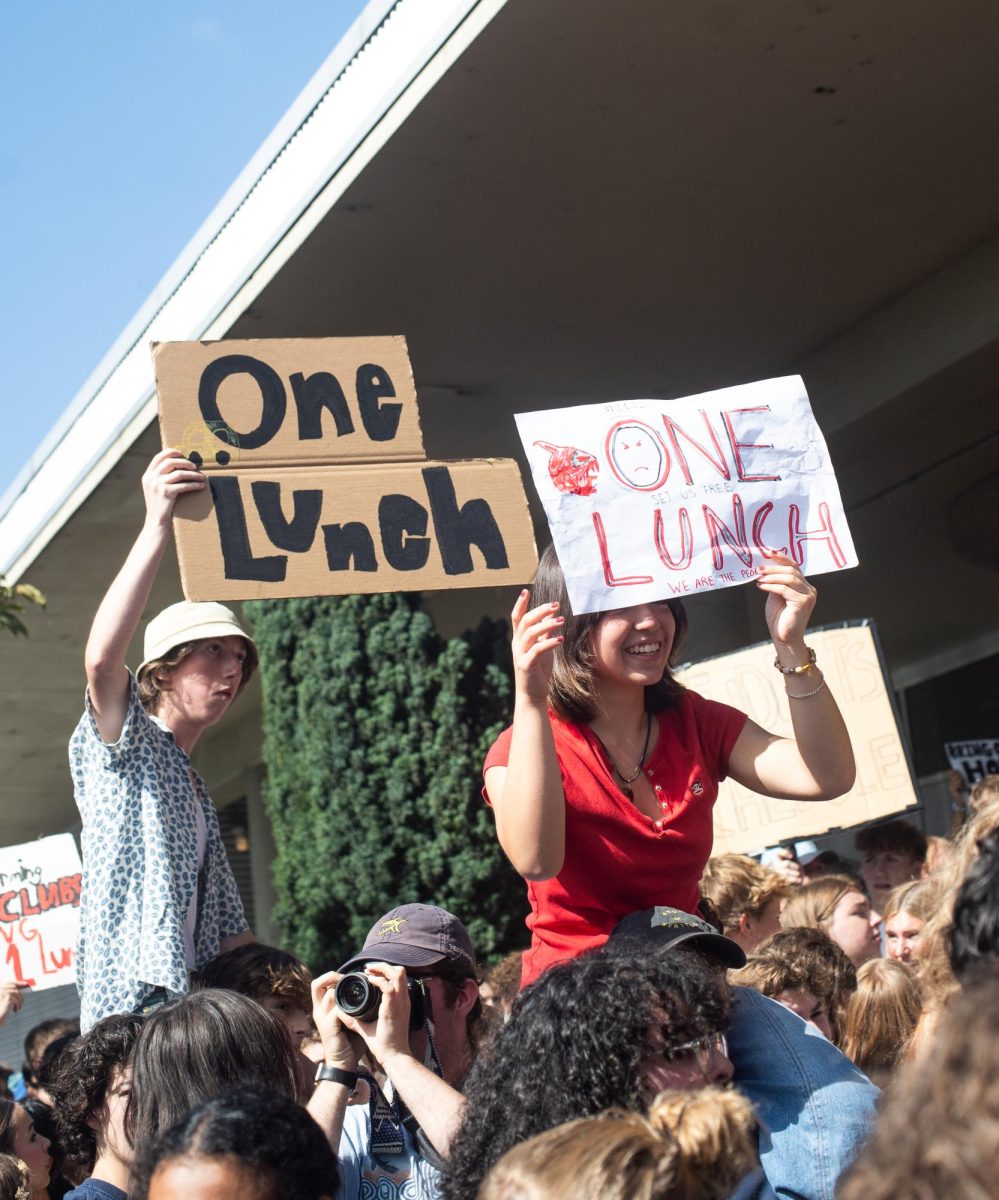
A district wide protest on Sept. 19, the original date for the policy to be enacted, pushed back the deadline to Oct. 6. Hundreds of students made their way to the John Stanford Center Building in SoDo to share their thoughts.
“Simply put I think it’s a stupid change,” sophomore Damian Miller said. “In my mind the main reason that they have given us for this change is people are waiting too long in the lunch lines. Personally as a student at Ballard that isn’t really an issue here.”
This new schedule, SPS claims, advances equity among students by diminishing the lunch rush, lessening the burden on lunch staff and allowing students to “…find a place to sit…” as described by their website.
“Yes I want equity but how is this equitable for the rest of the kids?” calculus teacher Oana Rus said.
Scheduling issues have risen between students and teachers; teachers are unable to allot time to help half their students during lunch with the split schedule.
“If they [teachers] have a different lunch then I have to go in after school or before school,” senior Clara Cooper said, “And sometimes it’s hard because I have work after school.”
Student’s afterschool commitments come in direct conflict with academic work arounds. Students like Cooper are forced to attempt to juggle after school help, a job, a sport and other extra curricular activities. Teachers also grapple with meeting students’ needs while accommodating for the schedule changes.
“There’s policies coming up like ‘offer retakes to the extent possible.’” calculus teacher Oana Rus said. “Well, how is that extent possible anymore?”
Not only are teachers and students broken up, but friend groups as well.
“A lot of people are very upset over it since lunch is the only time they can see their friends,” junior Beatrix Holt said. “They don’t really have a lot of time to see their friends and so lunch is a very important part of that.”
With the new schedule, Wednesdays stay as one lunch period. This exception allows for all students to be united under one lunch just one day of the week.
“Wednesdays are a pretty big thing now,” junior Waylon Walker said.
Though, with this exception comes other conflicts.
“On Wednesdays, usually we have Social Justice Club but I think with the lunch change we’re gonna only have it, like, every other week or like once a month because more people are going to want to see other friends,” Cooper said.
Many students take advantage of this single-lunch day to catch up with friends. However, with the split lunches some students find a way to spend time with their friends in a separate lunch regardless.
“I’ve heard that some people skip fourth period to have an extra long lunch,” Cooper said.
With students reportedly skipping fourth period, the schedule’s overall efficacy comes into question.
Student’s desires for a longer lunch are shared by staff as well.
“I preferred the lunch with the one hour, the single lunch,” Rus said. “That was the most sensible option.”
The single, one hour lunch allowed for teachers like Rus to provide more instructional time and help to students that needed it.
“I would say for the one hour lunch it was definitely good because it just gave us a chance to go out without feeling stressed for time,” Holt said.
Students still struggle to find time to eat with the 30 minute lunch.
“It becomes even shorter than 30 mins because you find your friends, you don’t know where you’re going to eat yet, and then it can be like a 20 min lunch,” Cooper said. ”Sometimes I don’t have time to finish my food.”
Clubs have also taken a hit with declined membership and attendance, an issue many anticipated during the walkout.
“Some of them are just going to shut down because they can’t meet at all,” Isabel Hernandez Ingraham High School junior said at the walkout.
Now, students like Cooper have to find workaround for the clubs they participate in.
“We have around 9 [DECCA] officers and most of them are in lunch A,” Cooper said. “It makes it harder for the people that have to present for lunch B because there’s sometimes only one or two people that can make it to the meeting so it’s hard to organize.”
As a DECCA officer, Cooper has reported being forced to leave fourth period in order to fill in for other officers in lunch B, losing instructional time to accommodate for the split lunch schedule.
However, math teacher Robert Dhatt offers his optimisms for Ballard High School’s resilience.
“Students and teachers are exceedingly good at creatively solving problems in ways that maybe they shouldn’t have to,” Dhatt said.