



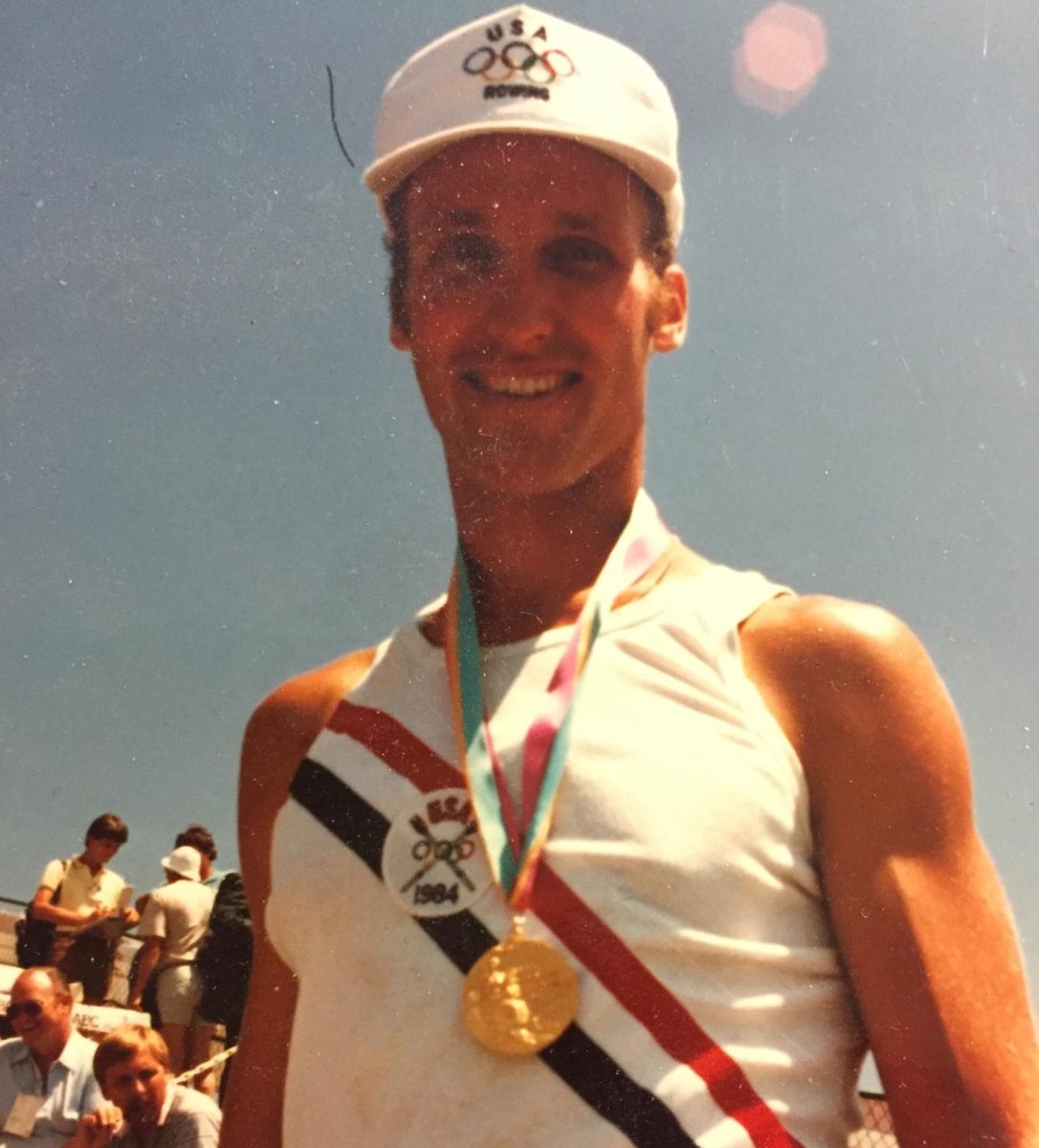

The air of the 1984 Summer Olympics filled with endless cheers as a gold medal was placed around Paul Enquist’s neck, as his own heart filled with a sense of satisfaction. Even though the win itself was already a personal achievement to Enquist, he didn’t know he had gotten the United States a gold medal in double sculls rowing for the first time since 1964.
Enquist, a graduate of both Washington State University (WSU) and Ballard High School, reflects on the moment decades later.
“After the race while catching our breath at the finish line area, I wasn’t thinking about being awarded the gold medal so much,” Enquist stated in an email. “I was feeling very satisfied. I had executed our race plan well. I had finally won an important race. That rarely happened in my career, especially at WSU.”
Surrounded by a surreal blur of action, Enquist didn’t realize he had just created unforgettable history by winning the event.
“The rest went by quickly,” Enquist wrote. “The medal, ‘Star-Spangled Banner,’ the crowd cheers, [it was all] almost a blur, as it turns out… winning became a rare event for the U.S.”
After this victory, as Enquist noted, the U.S. would not win another gold medal until 2004 which would be in the men’s eight and then not again until 2024 in the men’s four.
Enquist, who graduated in 1973, had played basketball and football for the school. Reflecting back, he recalls loving basketball but doesn’t remember receiving any support from his coaches.
“Basketball was my favorite, but partly due to skill and favoritism by the coach, I was kept on the bench most of the time,” Enquist wrote. “I don’t remember any encouragement or positive comments from any of the coaches at BHS.”
Josh Barnett, a renowned American mixed martial artist and professional wrestler, had played football and wrestled before graduating in 1996. He went to state for wrestling all four years of his high school career and, unlike Enquist, he remembers receiving support from both his coaches and teachers.
“I’m not sure that I could attribute it to just one, but I can say all my coaches were all encouraging and wanted me to succeed,” Barnett said in an email. “I had some solid teachers along the way as well, and enjoying being in a class can go a long way towards making school a lot easier.”
He currently runs Bloodsport, a professional wrestling event produced by Game Changer Wrestling. The event features matches in a ropeless ring where victories are only achieved by knockout or submission.
Barnett reflects on his high school experience of wrestling and realizes what he truly loved most: the spirit of competing.
“I really loved the thrill of competition,” Barnett said, “and the feeling that you were in a different world than the one most people know, especially in regard to high school. You develop so many different relationships and experiences, and from those end up doing things and meeting people you’d never have expected. Then you go out there and see who’s best, and that sort of environment can create great camaraderie and fast friendships.”
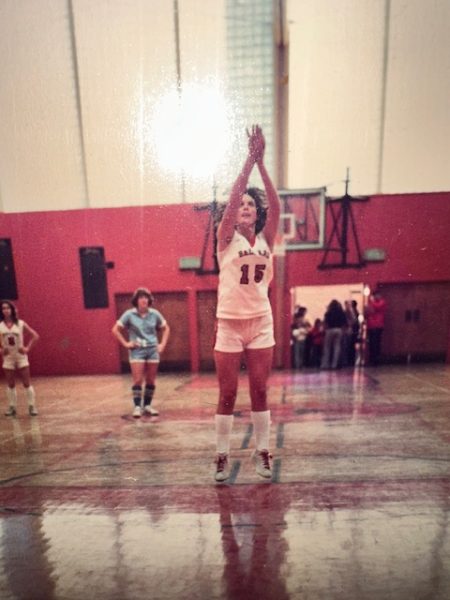
The year was 1978 when the Roosevelt high school gym was packed to the brim with Ballard and Roosevelt fans, as each basketball team fought to win districts in order to move onto state. At last, the buzzer blared, breaking the tension, and the Beavers erupted with cheers. Sue Stimac Verduin, known at the time by her maiden name as Sue Stimac, was raised into the air by the hands of her teammates, the MVP of the game.
Verduin was a star basketball player until she graduated in 1978. After earning All-American Honors at Seattle University, she became the first female at both BHS and Seattle U to have her jersey retired, and now has a community service award named after her.
“It never crossed my mind that we were blazing a trail for the future,” Verduin said in an email. “Yes, my teammates and I had the first opportunity to compete on teams and begin to set the bar for others. But we hadn’t experienced anything different so we were just happy to play and compete.”
Verduin explains that in order for women’s sports to become more successful, it requires more than just the athletes trying their best.
“I still challenge my family and friends that in order for women’s sports to continue to grow, it needs to be supported,” Verduin said. “That means [people need to] attend games, matches and meets. Be there for your friends and classmates.”
Verduin has stayed connected with the school decades later through leading the BHS Foundation by organizing events such as the Running of the Beavers 5K. She explains that the community has always been personally important to herself as the reason why she continues her support.
“My parents taught my brothers and I about the importance of community,” Verduin said. “I was raised knowing that faith, family and community were top priorities. That small town spirit has made Ballard such a strong community.”
Verduin isn’t the only alumni who has continued to support her alma mater decades after graduation.
“There are so many alumni of Ballard that have that deep root of community,” Verduin said. “They have given back to this community and school and prove to be a North Star for the next generation of Ballard grads.”